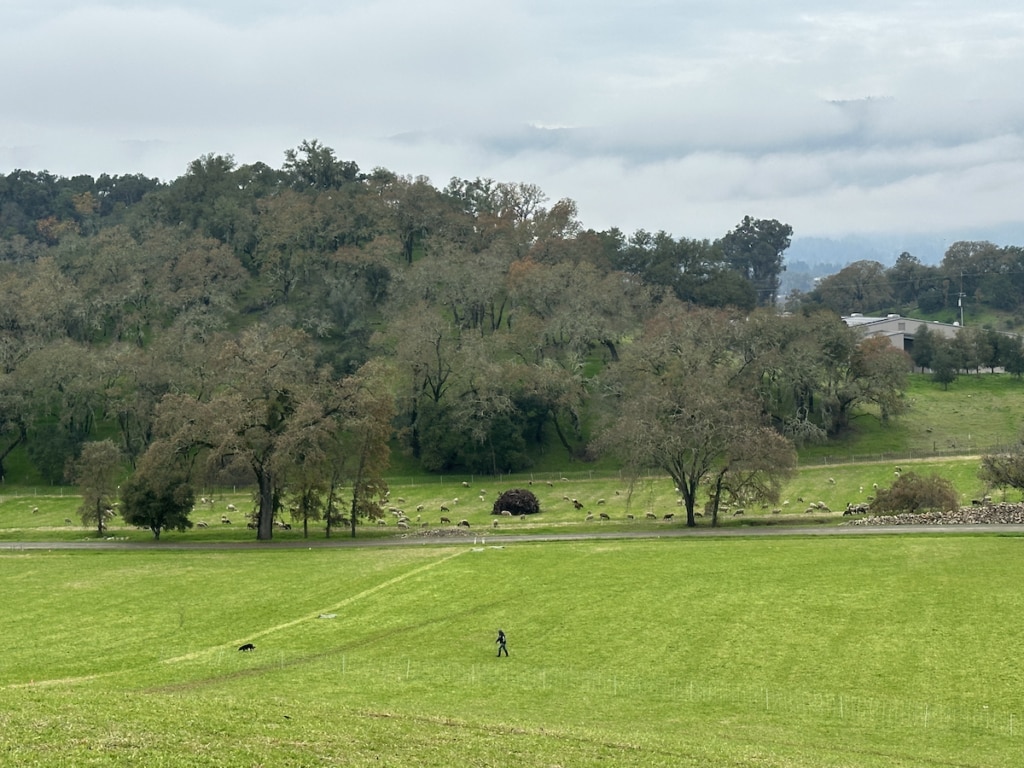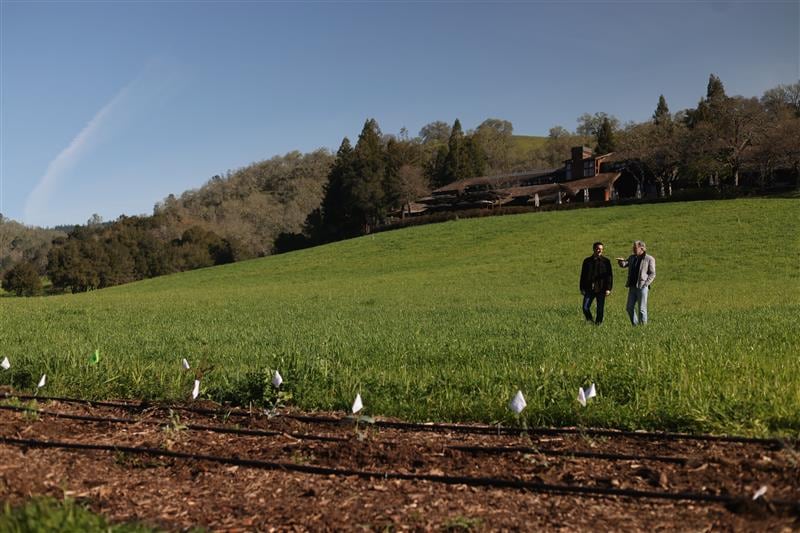
Welcome to our inaugural posting of the JPV Borgo Blog. With this blog, we look forward to bringing you a running stream of information on what we are doing in our vineyards and at Joseph Phelps’ Home Ranch with regard to Regenerative Farming – information that you can use in presenting our ambition and commitment to producing wines of the highest quality.
We refer to our grand plans as the Borgo Project. What is a Borgo anyway? Borgo is an Italian term that refers to a small village or hamlet. Beginning in the 1980s, small medieval villages in Italy were renovated into farm-to-table hotels and resorts. Borgo San Felice outside of Florence is one of the earliest and most notable examples. Visitors come to enjoy the food and wine and immerse themselves in the experience and the culture. Today, luxury resorts that provide engaging experiences that transport guests into the world of food and wine are one of the hottest global hospitality trends. Borgos – going by different names – are popping up all around the world.
What does Joseph Phelps mean by Borgo Project? Our ambition is clear and unwavering: we are committed to elevating the quality of our wines, and in particular Insignia, to the highest levels, comparable to – or surpassing – the finest wines in Napa Valley. In this effort, we are transforming our vineyard practices to Regenerative Farming. More on this in a bit. As we go through this journey, we will also be transforming our hospitality offerings to provide our guests and visitors with unique opportunities to interact and engage with our farming. Our guests will get their hands dirty in dark, rich, and aromatic soil. In Napa Valley, wineries are not permitted to operate hotels or lodgings for profit. So, we cannot be a Borgo in the fullest sense. However, by retaining the name Borgo, we are reminding ourselves that our farming is the basis for all of our hospitality. In producing the finest wines, our intent is to also create the first Borgo in Napa Valley that will bring our guests directly into the fabulous world of farming, dining, and reconnecting with nature.
The ambition to produce the finest wines always begins in the vineyard. In 2024, we engaged two consultants and various firms to begin the journey of transforming our vineyards and our farming practices. Over a 9-month period, we conducted extensive studies that informed us about every aspect of our Home Ranch vineyards: soil type, hydrology, carbon content, existing ecosystem, and cataloguing every plant and animal on our property. This massive study is informing and guiding our vineyard efforts. Today we are beginning our first work in the vineyards! We will share the details of this with you through future Borgo Blog postings.
Regenerative, Agroecology, Agroforestry, Permaculture, Polyculture… what does it all mean?
Unfortunately, there is an inherent issue with the use of the term Regenerative Farming. There is a cynicism out there that this is just another fancy term companies are using to convince people to buy their products. Greenwashing is a real thing out there. We get eye-rolls sometimes when we talk about Regenerative Farming… oh yeah, you too… For that reason, we open our discussions and presentations on our farming with reference to the French term, Agroecology. Even in France, however, there are several terms. Some prefer Agroforestry – focusing more directly on the role of trees in farming. And some refer to permaculture (keeping the ground permanently covered) or polyculture (moving from monocrops to polycrops). And what about “biodynamic farming”? Organic? Sustainability? It can all be confusing.
We prefer the use of the term Agroecology because it is all-encompassing and because people are generally more open to hearing and learning about this. The term itself first appeared in 1928 when Basil Bensin used agro-okologie to describe the study of crops in relation to the environment. In the 1960s, Miguel Altieri, a Chilean agronomist, was pivotal in redefining the term as a systems-based approach rooted in traditional and indigenous farming knowledge. Today, agroecology is widely recognized as a science, practice, and movement that applies ecological principles to the design and management of food systems that restore the diversity and health of the environment.
What do we say – whatever you call it? We believe that viticulture, and agriculture in general, must make a philosophical leap. Traditional farming works to control and manipulate nature to produce results. Our approach to farming looks to bring back the full diversity of nature, in the soil (microbes and fungus) and on the surface (multiple plants, not monoculture). Once the natural ecosystem and cycles are re-established, we will farm in sync and in synergy with the ecosystem… with nature! Wineries and farmers who have made this philosophic leap have exhibited vines that produce higher quality grapes with vines that are more resistant to climate variation and health pressures.
We will try to untie the messy knot of what this all means as we go forward with this blog.
What is happening now at Joseph Phelps – Preparing the soil and cover crops…
After more than a year of studying our Home Ranch and preparing our vineyards, we have finally broken ground in the first steps of our farming with agroecological principles. The first parcels in our Home Ranch vineyards were sowed this past fall with a broad range of seeds to create a “cover crop.” Cover crops serve many purposes: increase the permeability of the soil to retain more water, to prevent possible erosion during heavy winter rains, and to improve the health of the soil with legumes that bring nitrogen from the air into the soil. The seeds that we have selected will produce grasses, flowers, and legumes that will grow not only in the winter, but also in the summer – providing cover to our soils all year long.
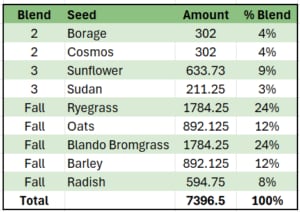
Traditionally, cover crops, grasses, and legumes in vineyards are turned into the soil by tractors, and sometimes horses, in the spring, leaving the soil bare and exposed to the sun through the course of the summer, only to have the process repeated the following winter. One of the primary elements of agroecological farming is referred to as “permaculture” – keeping the ground covered at all times. Leaving the soil bare and exposed is detrimental to its health. The bacterial and fungal populations are damaged or killed. And the soil is oxidized under the glare of the sun. Soil becomes dirt. Having a year-round healthy and growing bacterial population in the soil makes the roots of all plants more healthy. Fungus – mushrooms and the fibrous network underground called mycelium – serves many roles. Most fun… mycelium produces a sticky compound called Glomalin. Glomalin helps soils clump, and it improves water infiltration and retention. Without Glomalin, soil does not clump in your hands.
We are just starting to learn more about how soil is a living thing. The complexity is mind-boggling. One teaspoon full of microbe-rich living soil contains more living organisms than there are people on the planet! To save our soils, and to make the best wine…! we need to better understand and respect nature’s complexity.
What’s next? Our next step is to start planting trees, bushes, and shrubs in and around our vineyards to create a polyculture. See you next time for that!
Good Reads, Good Listens, and where can you study up on all of this…
We can only cover so much in this blog. There are many good sources of information available. On each blog, we’ll identify a few great reads and sources of information like specific podcasts. Best of all, come visit us at Joseph Phelps… and send your customers, clients, family, and friends here. We’ll be sure that they have a great time, try some great wines, and learn a little bit about farming with nature. Here are our first suggestions. Cheers!
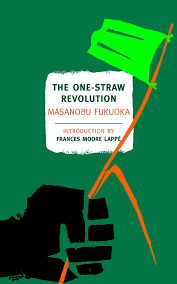
Regenerative Reading and Listening Recommendations
One Straw Revolution by Masanobu Fukuoka. Published in 1975, one of the first modern examples of natural farming practices with his “do-nothing” approach. Perfect place to start to learn about the philosophy of farming with nature.
And if you want to deep-dive into the technical aspects, no one better to listen to than John Kempf and his podcasts. Seek out the Rooted in Organic podcast, “The Crux of Regenerative Agriculture with John Kempf,” first aired on February 8, 2021.